
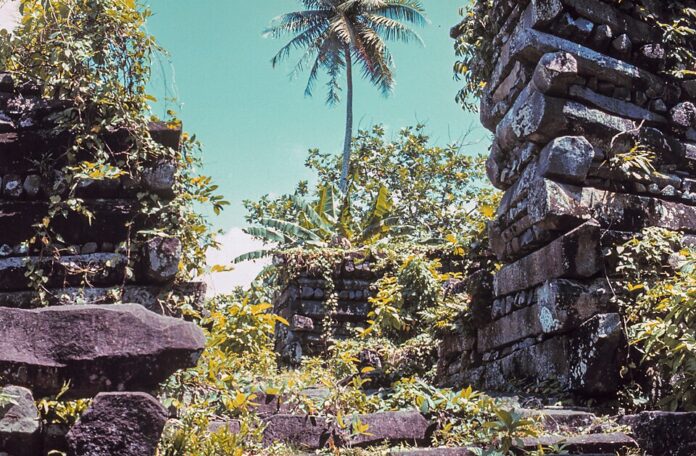

Far out in the western Pacific, where the ocean turns deep blue and the horizon seems to go on forever, lies one of the world’s strangest and most thrilling ruins. No signposts. No ticket booths. Just stone, sea, and silence.
This is Nan Madol—an ancient city built not on land, but on the ocean itself.
Often called the “Venice of the Pacific,” Nan Madol sits just off the coast of Pohnpei, a lush island in Micronesia. From above, it looks like a puzzle scattered across the water: nearly a hundred artificial islets, all linked by narrow canals, all built from colossal slabs of black volcanic stone. How they got there—and why—has puzzled explorers, archaeologists, and storytellers for centuries.
A City Made of Giants’ Stones
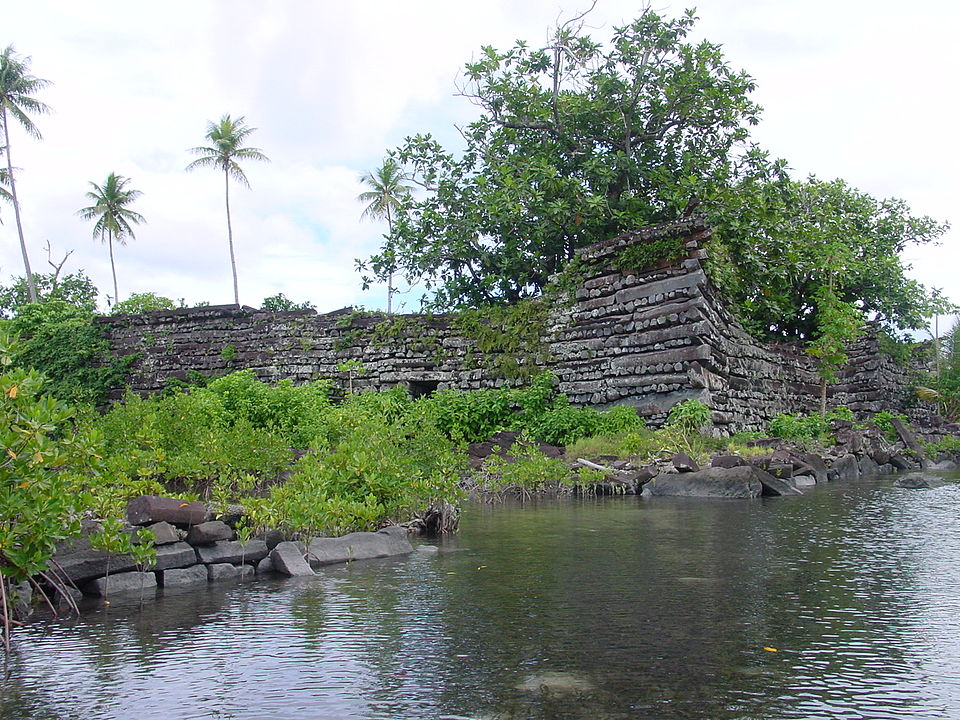
The first thing that hits you about Nan Madol is the scale. The walls are made of huge basalt columns, stacked like giant logs in a game of gods. Some of these stones weigh several tons. There are no quarries nearby. No written records. No evidence of wheels, pulleys, or metal tools.
And yet—there it stands.
Nan Madol was built between about 1200 and 1600 CE, long before European ships reached the Pacific. It was the ceremonial and political centre of the Saudeleur dynasty, rulers who once controlled much of Pohnpei. This wasn’t a city for everyday life. It was a place of power, ritual, and command—a stone heart ruling a green island.
The ruling elite lived among the islets, separated from ordinary people by water and walls. The canals were their streets. Canoes replaced carts. Tides replaced clocks.
Power, Fear, and the Fall of a Dynasty
Life under the Saudeleurs was strict. According to local legends, the rulers demanded constant tribute—food, labour, loyalty. Over time, resentment grew.
Then came a stranger.
Stories tell of Isokelekel, a warrior from a distant land who arrived by sea with 333 followers. Some legends say he was part-god. Others say he was simply clever and brave. What matters is this: he challenged the Saudeleurs—and won.
After their defeat, Nan Madol was abandoned as a capital. The jungle crept back. The sea kept flowing through the canals. Power shifted, and the stone city slowly became a place of memory and mystery.
A Place Wrapped in Legend
Ask locals about Nan Madol and you’ll hear more than dates and dynasties.
Some say the stones were flown into place by magic. Others claim the city is haunted—that spirits guard certain ruins and punish those who show disrespect. Fishermen speak of strange feelings when they paddle through the canals: sudden chills, a sense of being watched, an urge to leave quickly.
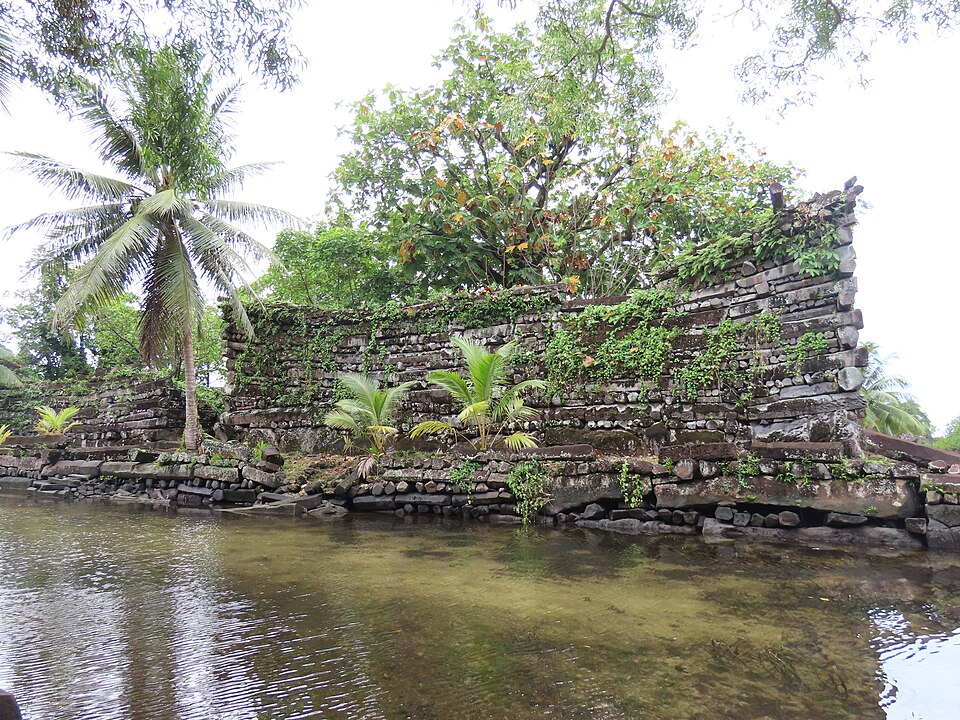
Even early European visitors were unsettled. In the 1800s, explorers hacked through jungle and waded through mangroves to reach the ruins, describing them as eerie, silent, and heavy with meaning. One compared Nan Madol to a forgotten fortress built by a lost civilisation.
And standing there today, it’s easy to see why.
Why Nan Madol Still Matters
Nan Madol isn’t just impressive—it rewrites what we think ancient societies could do.
This was a complex, organised culture capable of massive engineering projects, all without modern technology. It shows that the Pacific Islands were never “empty” or “simple,” as old textbooks once suggested. They were connected, innovative, and powerful in their own right.
In 2016, Nan Madol was named a UNESCO World Heritage Site, recognised as one of the most important archaeological locations in the Pacific. But it’s also endangered. Rising sea levels, storms, and time itself threaten the fragile ruins.
Adventure Isn’t Over
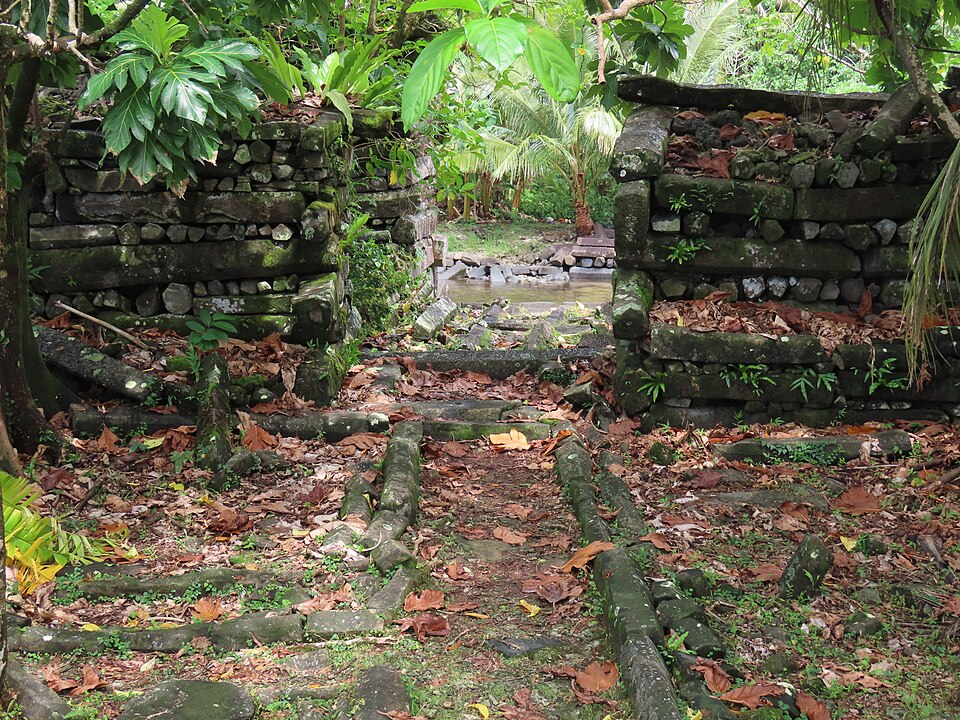
Reaching Nan Madol today is still an adventure. You paddle through mangrove channels, step onto slippery black stones, and wander between walls that have stood for 700 years. There are no fences. No guided arrows. Just you, the sea breeze, and the feeling that you’ve stepped into a place slightly out of time.
Nan Madol doesn’t shout its secrets. It waits.
And that might be the greatest thrill of all.

