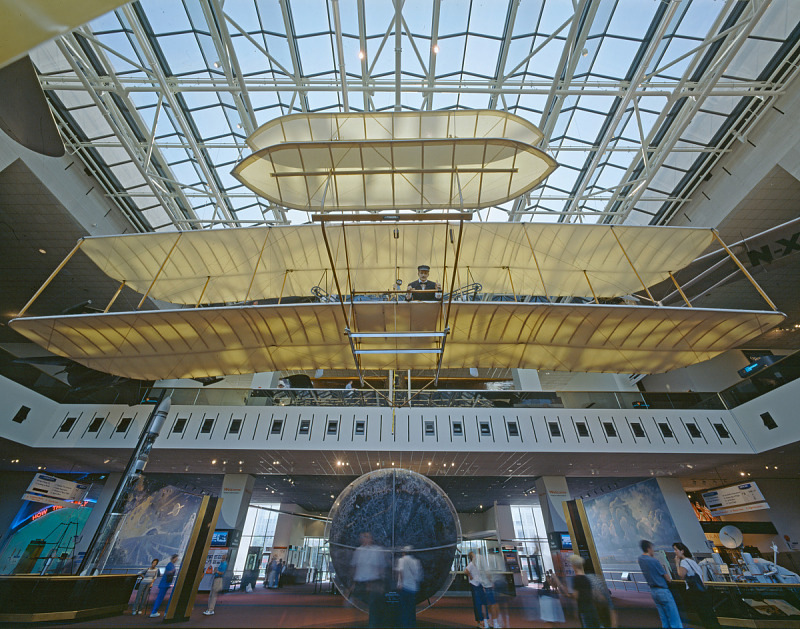
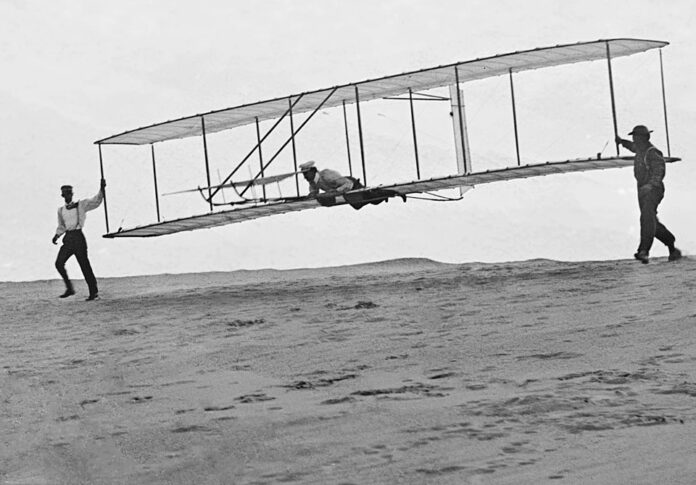

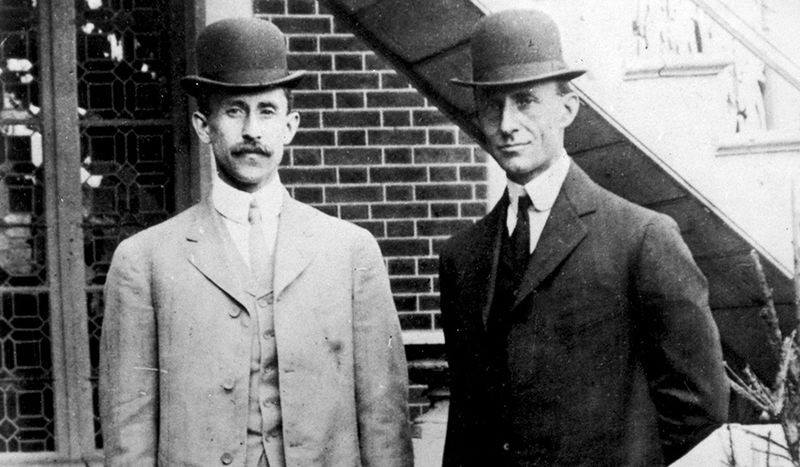
It was a crisp, clear morning in December 1903 when the world was forever changed. On a windswept beach in Kitty Hawk, North Carolina, two men—brothers from Dayton, Ohio—did what had once seemed impossible. They soared into the sky, breaking the chains of gravity and proving that human flight was no longer just a dream. Their names were Orville and Wilbur Wright, and they were about to make history with a machine that would change the world forever: the Wright Flyer.
The Dream of Flight
For centuries, humans had looked to the sky and wondered, “What if we could fly?” Stories of birds gliding on the wind, of ancient myths of winged creatures, and the relentless curiosity of inventors all led to one common goal: flight. But while the dream had inspired countless men and women, no one had yet managed to create a flying machine that could lift off the ground, stay in the air, and return safely to earth.
Enter the Wright brothers. Orville and Wilbur weren’t just dreamers—they were doers. Growing up in Dayton, Ohio, they had always been fascinated by machines, tinkering with bicycles and later moving on to more complex inventions. They were self-taught engineers, with no formal training in aerodynamics, but their ingenuity and dogged determination would prove more than enough to turn their dream into a reality.
The Road to Invention
The brothers’ journey began in the late 1890s, when they first became interested in flight. It was not just the idea of flying that intrigued them—it was the challenge. They wanted to understand how flight worked, and what it would take to build a machine that could fly under its own power.
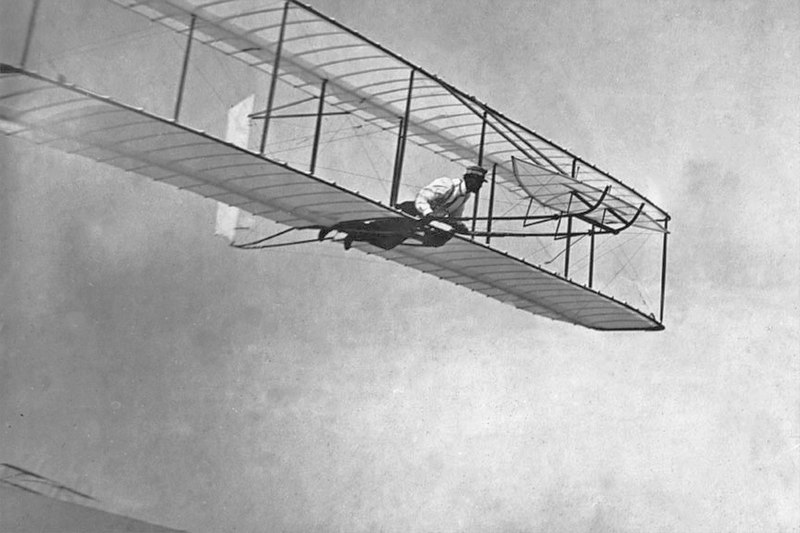
In 1899, they read about the experiments of other inventors, like Samuel Langley and Octave Chanute, who had tried and failed to create flying machines. But the Wrights weren’t discouraged. Instead, they saw these setbacks as stepping stones. They began building their own designs, starting with gliders that they tested in the winds of the Ohio countryside. But it wasn’t just about the glider itself—it was about understanding the mechanics of flight.
For the Wright brothers, the key to successful flight wasn’t just a powerful engine or wings that could lift off the ground—it was control. Unlike many inventors before them, who focused on simply getting their machines airborne, the Wrights figured out that controlling the aircraft in the air was just as important. They designed a system of wing-warping, which allowed them to steer and balance the plane while in flight—a breakthrough that would set them apart from all other inventors.
Funding the Dream
While the brothers had the skill and the vision, one thing they lacked was money. The costs of building a flying machine weren’t small, and many people thought they were wasting their time. But the Wrights weren’t discouraged. They funded their experiments largely by the profits from their bicycle sales, carefully saving every penny they earned.
It wasn’t easy. They had to make sacrifices, often spending months with little more than the basics. They also had to seek out investors, but even those who believed in them were hard to find. For a time, it seemed as though their dream of flight might remain just that—a dream.
However, in 1901, after some initial gliding tests that failed to live up to their hopes, the brothers faced one of their toughest challenges. They had suffered a major setback when their gliders didn’t perform as expected. But rather than throwing in the towel, they doubled down, reviewing their designs and making crucial adjustments to improve both their engines and their understanding of aerodynamics.
The First Flight: A Dream Realized
The day was cold and windy—perfect conditions for a flight. Orville was at the controls, and with Wilbur by his side, the moment of truth had arrived. At 10:35 a.m., the Wright Flyer, their most ambitious creation yet, took to the sky. It flew for 12 seconds, covering a distance of 120 feet, before landing gently on the sand. The first controlled, sustained flight of a heavier-than-air machine had just been achieved.
The brothers didn’t stop there. Over the next few hours, they made several more flights, each one longer than the last. Wilbur’s flight reached an impressive 852 feet and lasted 59 seconds—a breathtaking achievement for two men who had once been laughed at by so many.
It wasn’t just the machine that had made history—it was the vision, the years of hard work, the setbacks, and the undying belief in the impossible. The Wright brothers had done it. They had conquered the skies.
The Legacy of the Wright Flyer
Though they didn’t receive immediate recognition, the Wright brothers’ success would soon become clear to the world. Their flights at Kitty Hawk marked the beginning of the age of aviation. What was once a dream had become a reality, and the world would never be the same.
Today, we look at airplanes and jets zipping across the sky and take for granted the miracles of flight. But none of it would have been possible without Orville and Wilbur Wright—the two brothers who believed that if you wanted to fly, you had to keep going even when the world said it couldn’t be done.
Their names are forever etched in history as pioneers of flight—men who defied the odds, took to the air, and showed the world that the sky was no longer the limit. From that first 12-second flight in 1903 to the vast network of modern air travel we know today, the Wright brothers’ legacy lives on, reminding us all that with determination, imagination, and the will to push forward, anything is possible.