


There’s something undeniably thrilling about the idea of riding your very own, hand-crafted skateboard. Whether you’re carving through the streets, pulling off tricks in the park, or just cruising down your favorite hill, a custom-built board can give you that extra sense of freedom. But here’s the real kicker: building your own skateboard is easier than you might think, and it’s a fantastic project that will not only teach you valuable skills, but also give you a board that’s uniquely yours. Ready to roll? Let’s get started!
Step 1: Choose Your Deck – The Foundation of Your Skateboard
The deck is the main platform of your skateboard, and it’s where all the action happens. Without a good deck, your board won’t be much use, so picking the right one is key. Here’s what you’ll need to know:
- Material: Most skateboard decks are made from maple, but you can also find decks made from bamboo or plastic. Maple is the traditional choice because it’s strong, durable, and gives you the right amount of flex. However, if you’re looking for a lightweight and eco-friendly option, bamboo is a great alternative.
- Shape & Size: Skateboards come in various shapes—some have a classic, flat outline, while others have a more concave shape for added control. For most beginners, a deck that’s about 7.5 to 8.5 inches wide is ideal. This width offers a good balance between stability and maneuverability.
- Where to Get It: You can either buy a pre-made deck from a skate shop, or if you’re feeling particularly adventurous, you can make your own. To make a DIY deck, you’ll need a piece of wood (maple or plywood works best), a jigsaw, sandpaper, and a deck template (which you can easily find online).
Step 2: Attach the Trucks – Getting the Wheels Rolling
Now that you’ve got your deck, it’s time to attach the trucks—the metal parts that hold the wheels in place and allow you to steer your skateboard. Here’s what to look for:
- Choosing Your Trucks: There are two main types of skateboard trucks: traditional and reverse kingpin. Traditional trucks are best for street skateboarding, while reverse kingpin trucks are great for downhill or longboarding. Since you’re building a standard skateboard, traditional trucks should be just the ticket.
- Width of Trucks: The width of your trucks should match the width of your skateboard deck. For example, if your deck is 8 inches wide, look for trucks in the 7.75” to 8.25” range. Trucks that are too wide or too narrow can affect your ride, so it’s best to get the right size.
- How to Attach the Trucks: To attach your trucks, simply line them up with the pre-drilled holes in your deck. Using a drill and screwdriver, attach the trucks with screws. Tighten them securely but avoid over-tightening, as you want them to pivot smoothly when you lean into turns.
Step 3: Add the Wheels – The Grip That Gives You Speed
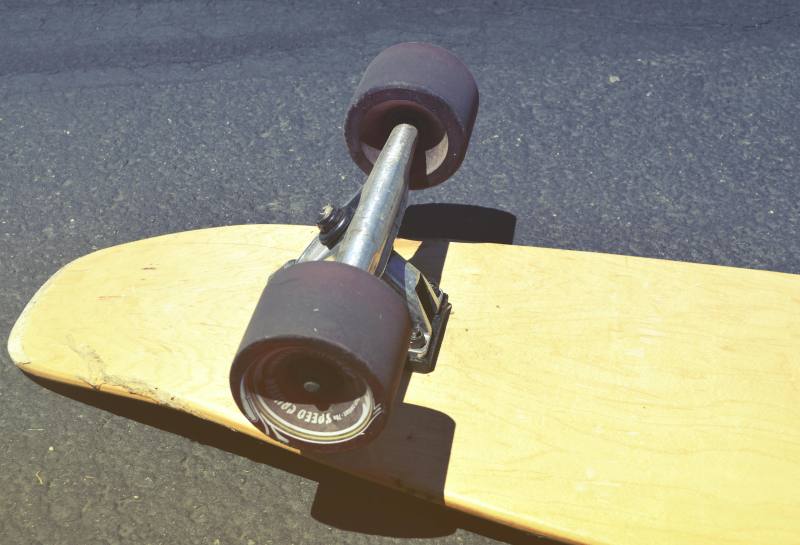
Wheels are where the magic happens. Without good wheels, your skateboard will feel sluggish and rough to ride. Here’s how to pick the right ones:
- Material: Most skateboard wheels are made of urethane, a durable material that gives you the right balance of grip and smoothness. The hardness of the wheels is measured on a durometer scale. Softer wheels (78A to 87A) are perfect for rough surfaces or downhill riding, while harder wheels (88A to 101A) are ideal for smooth, paved streets and street tricks.
- Size: Skateboard wheels come in various sizes. Smaller wheels (50-52mm) are great for technical street tricks, while larger wheels (54-60mm) are better for cruising and downhill riding. A good middle-ground size for an all-around board is 54mm.
- Installing the Wheels: Once your trucks are securely attached, it’s time to install the wheels. Slip each wheel onto the axle and secure it with a bearing. Bearings are the small metal pieces that fit inside the wheels and allow them to spin. Tighten the nuts with a wrench, but don’t overdo it—your wheels should spin freely with just a little resistance.
Step 4: Grip Tape – For Maximum Traction
Grip tape is what helps your feet stay planted on the board, giving you the traction you need for control. Here’s how to apply it:
- Cut the Grip Tape to Size: Measure your skateboard deck and cut the grip tape accordingly. Make sure it’s large enough to cover the entire top of your deck. Grip tape comes in large sheets, so be sure to cut it to match the dimensions of your deck.
- Applying the Grip Tape: Peel off the backing of the grip tape and carefully place it on the top of your deck, making sure it’s centered. Use a knife or razor blade to trim any excess tape along the edges. To make sure the grip tape sticks well, press it down using a roller or a flat tool. You don’t want any air bubbles trapped underneath.
- Finishing Touches: Use a file to smooth the edges of the grip tape, so there are no rough spots that could cause discomfort while you’re riding.
Step 5: Customize Your Ride – Making It Your Own
Now that your board is built, it’s time to make it yours. Here are a few ideas to add some personal flair:
- Paint Your Deck: If you’re feeling artistic, grab some paint and design your own custom graphics on the bottom of your deck. Whether you go for a simple design or a full-on masterpiece, painting your deck will make it truly one-of-a-kind.
- Add Stickers or Decals: Stickers are an easy way to personalize your skateboard. You can pick them up at your local skate shop, or even design your own and print them out.
- Test Ride Your Board: Finally, take your new skateboard for a spin! Adjust the trucks if needed to find the right level of responsiveness, and remember: it might take a few rides to get everything dialed in just the way you like it.
Final Thoughts – Ride Like a King

Building your own skateboard is more than just a fun project—it’s a way to connect with the history and art of skateboarding. From choosing the right materials to adding your personal touch, every step is a chance to hone your craft and make something truly your own. So grab your tools, gather your materials, and start building a skateboard that will take you on epic rides and give you the freedom to conquer any street or hill that stands in your way.
Happy skateboarding, and remember: every great skateboarder started with the basics, so get out there and build the ride of your dreams!

